Listening to the next generation: Zuri’s voice on the climate emergency
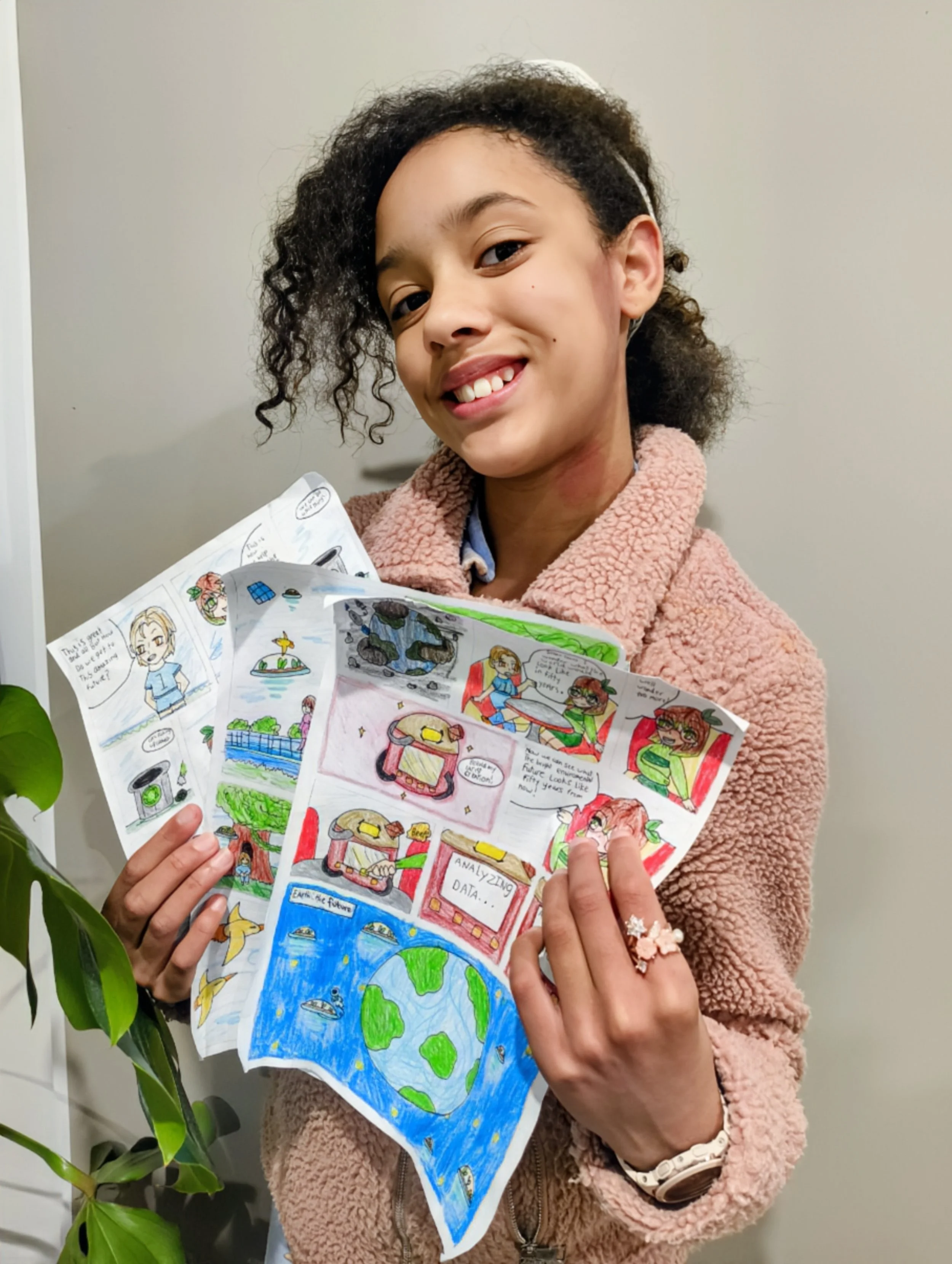
Zuri Mei, aspiring activist.
At just 12 years old, my niece Zuri Mei is already tuned in to the urgent challenges facing our planet. Growing up in Australia, where the impacts of climate change are becoming impossible to ignore, she has developed a striking awareness of the climate crisis. Her words and her creativity remind me that the next generation is not only watching, but also thinking, feeling, and speaking about the future in ways that are impossible to dismiss.
When I asked Zuri a set of questions about the environment, her answers startled me with their clarity and honesty. These weren’t the vague responses of a child repeating what she’d overheard. They were thoughtful, heartfelt reflections rooted in both her lived experience and her deep sense of responsibility.
The first thing that stood out was how much she connects environmental issues with everyday life. “Well, there are some things that make me feel worried and upset,” she wrote. “People that smoke… when I looked through the window I could see all the smoke rising up into the sky. That makes me very worried and upset.” For Zuri, pollution isn’t just about factories or distant disasters—it’s something she notices in her immediate world. Smoke in the sky isn’t an abstract pollutant; it’s a visible, frightening reminder of how fragile the air we breathe really is.
When I asked her what she thinks of the phrase climate emergency, her description stopped me in my tracks. “It’s like flashing red lights in my mind, saying, ‘come on, it’s a climate emergency!’ The climate is in danger, we have to come together as a community to help fix our climate.” In just a few lines, she captured the urgency so many adults seem to gloss over. To her, it’s a blaring siren demanding action, not a phrase to be debated.
Zuri is also deeply practical. She sees solutions in the small, everyday choices that anyone can make. “Use a reusable bottle,” she suggested. “Because having a plastic bottle damages the environment. Turn the lights off when you leave any room. Pick up rubbish when you go for a walk.” These are simple steps, but what struck me is how she frames them—not as insignificant gestures, but as part of a bigger effort to care for the planet.
One of her strongest concerns is littering. “The thing that makes me overwhelmed about climate change is that people are dumping their rubbish,” she wrote. She notices the impact every time she’s in the car: “My mum drives me to the shops and we’re on the freeway, we pass so much rubbish. Just dumped there!” She admits it can feel discouraging, but she also finds hope when she sees others taking action: “Sometimes I see people with bags and gloves picking up the rubbish so that makes me relieved and calm.”
Her words reminded me of how observant children are. While many adults rush through life without noticing the discarded cans or plastic bags on the roadside, Zuri sees it all. And she feels it—deeply. The sadness, the frustration, and the relief when others try to make things right. Reading that, I realised that Zuri and her peers are already thinking about systems-level changes—like making sustainable technology more accessible—while also understanding the importance of awareness and advocacy. She doesn’t see herself as powerless; she sees herself as part of a movement, one voice among many, determined to make a difference.
Zuri’s Creative Task: Imagining a Future Worth Fighting For
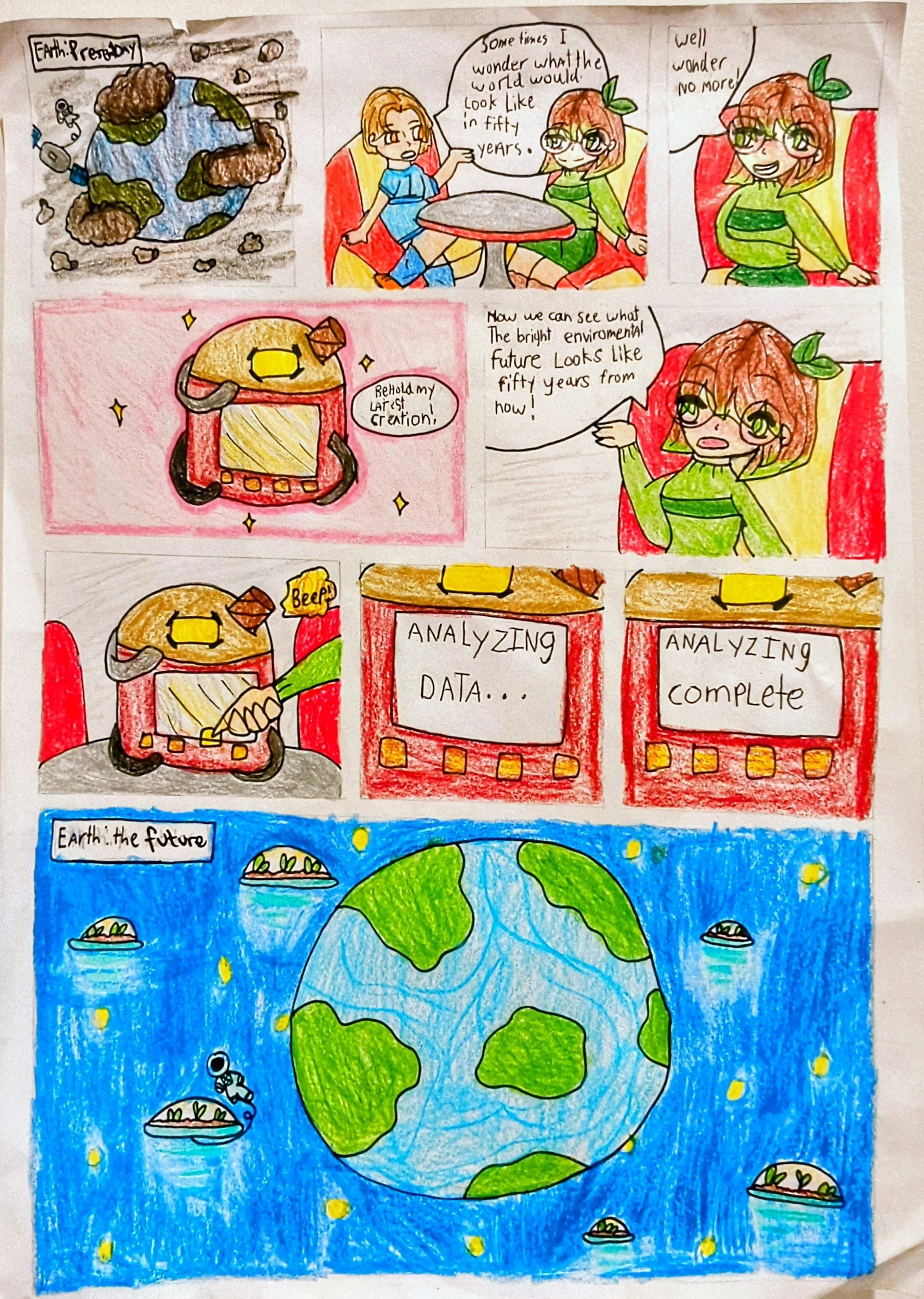
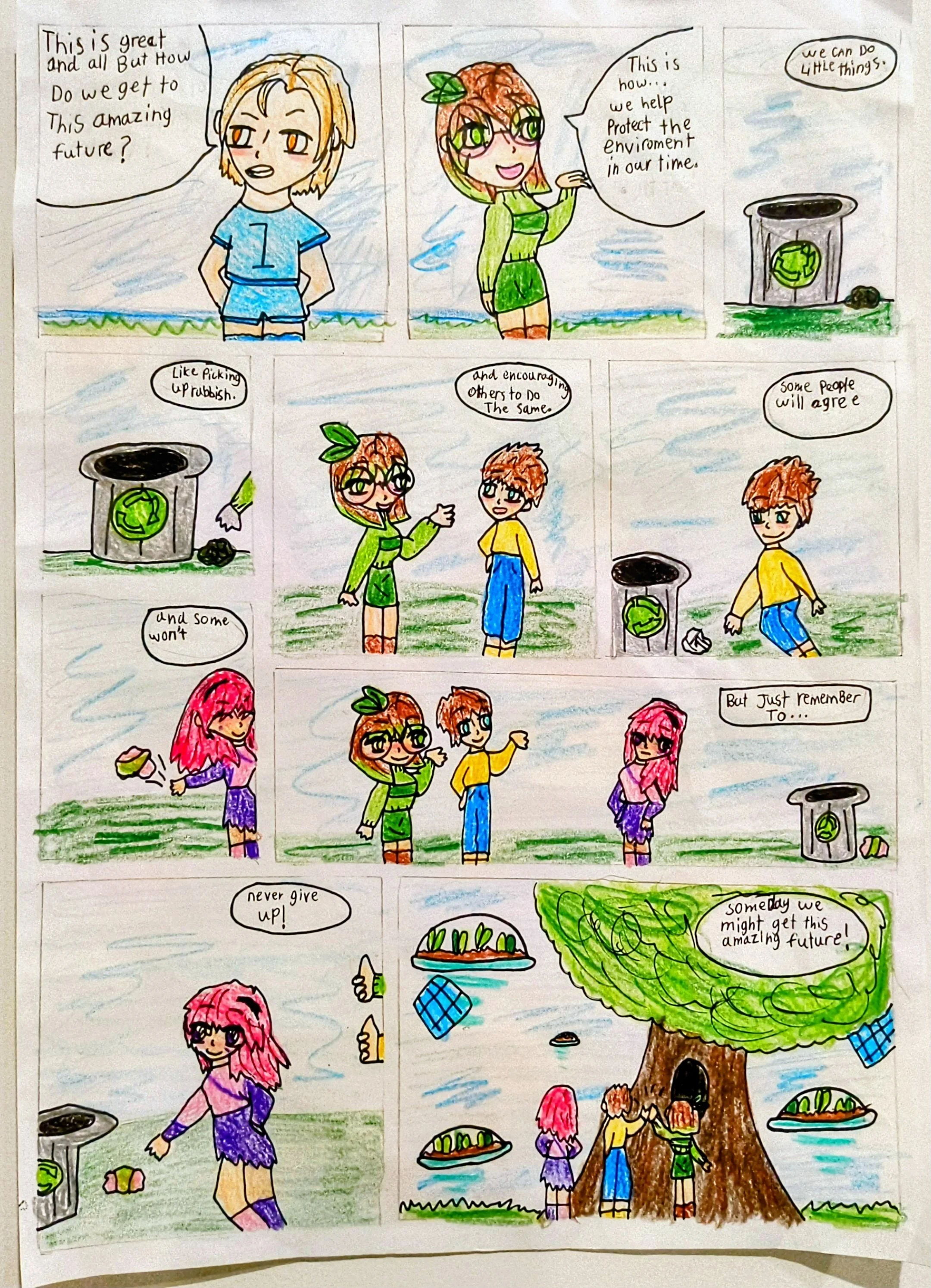
Alongside her written answers, I asked Zuri to create something—an artwork or story—that expressed her feelings about climate change. What she produced was extraordinary: a colorful comic strip that begins with a simple question, “How do we get to this amazing future?”
In her drawings, children answer: “This is how… we help protect the environment in our time. We can do little things, like picking up rubbish, and encouraging others to do the same.” The story acknowledges that some people will agree and others won’t, but her characters remind each other to “never give up.”
By the final panels, Zuri has sketched out her vision of a transformed world: clean rivers flowing, trees towering with lush green foliage, futuristic electric cars gliding past, holographic signs floating in the air, birds flying freely, and—perhaps most strikingly—no rubbish anywhere. The children stand beneath a vast tree, looking out with hope as one of them declares: “Someday we might get this amazing future!”
What her comic shows so beautifully is the connection between the smallest of actions and the largest of dreams. Picking up rubbish may feel insignificant, but in Zuri’s imagination, it’s the first step on the path to a thriving, futuristic, sustainable Earth.
The Responsibility We Share
Zuri’s words and her artwork together form a powerful message. She is only 12, yet she already sees both the problems and the possibilities with sharp clarity. She notices the litter, the smoke, the waste, and she feels their weight. But she also sees solutions, and she envisions a brighter tomorrow where technology and nature coexist in harmony.
Her answers and drawings left me with a profound sense of responsibility. If at 12 years old she is already carrying these worries and hopes, what right do we as adults have to ignore them? It is on us to match her awareness with action—to reduce emissions, to protect wildlife, to clean up our communities, to make sustainable choices affordable and accessible.
The next generation, Zuri included, is speaking clearly. The real question is: are we listening?
